

Gregory Tutt
Chief Technology Officer, Strato
Over the past year, I’ve noticed a growing shift in how people expect to interact with enterprise systems.
As conversational AI becomes more familiar, users are becoming more comfortable asking systems for what they need, rather than navigating through menus, screens, and process steps to find it themselves.
HR systems are starting to move in the same direction.
Platforms such as SAP SuccessFactors with Joule, and SmartRecruiters with Winston, are examples of how conversational interaction is becoming part of the enterprise HR experience. This does not mean the user interface becomes unimportant. Good UI still matters. But the way users interact with HR systems is evolving.
Instead of navigating through multiple screens to find a document, users increasingly expect to ask for it directly.
Instead of manually following a structured process, they increasingly expect systems to help coordinate tasks, surface relevant information, and guide work in context.
That shift is interesting, because it changes the question.
It is no longer only about whether an HR system has a better interface.
It is also about whether the system understands enough about the workflow, the document, the permissions, the data, and the business rules behind the request to respond in a useful way.
The Interface Is Only One Part of the Experience
A conversational interface can make a system feel simpler.
But simplicity at the front end does not remove complexity from the process underneath.
In many organisations, people already know how to work around fragmented HR processes. They know where documents are stored. They know which naming conventions are used unofficially. They know who to contact when something does not follow the expected process. They know which exception applies in which situation.
That context often sits outside the system.
It may sit in people’s heads, inboxes, shared folders, team habits, or local ways of working that have developed over time.
"AI systems do not automatically inherit organisational context."
This is where the challenge becomes more operational than technical. A user may ask a simple question, but the system still needs to understand where information sits, which rules apply, who has permission to access it, and what should happen next.
If the structure underneath is unclear, the AI layer may expose that inconsistency rather than resolve it.
The Harder Problem Is What Happens Behind the Screen
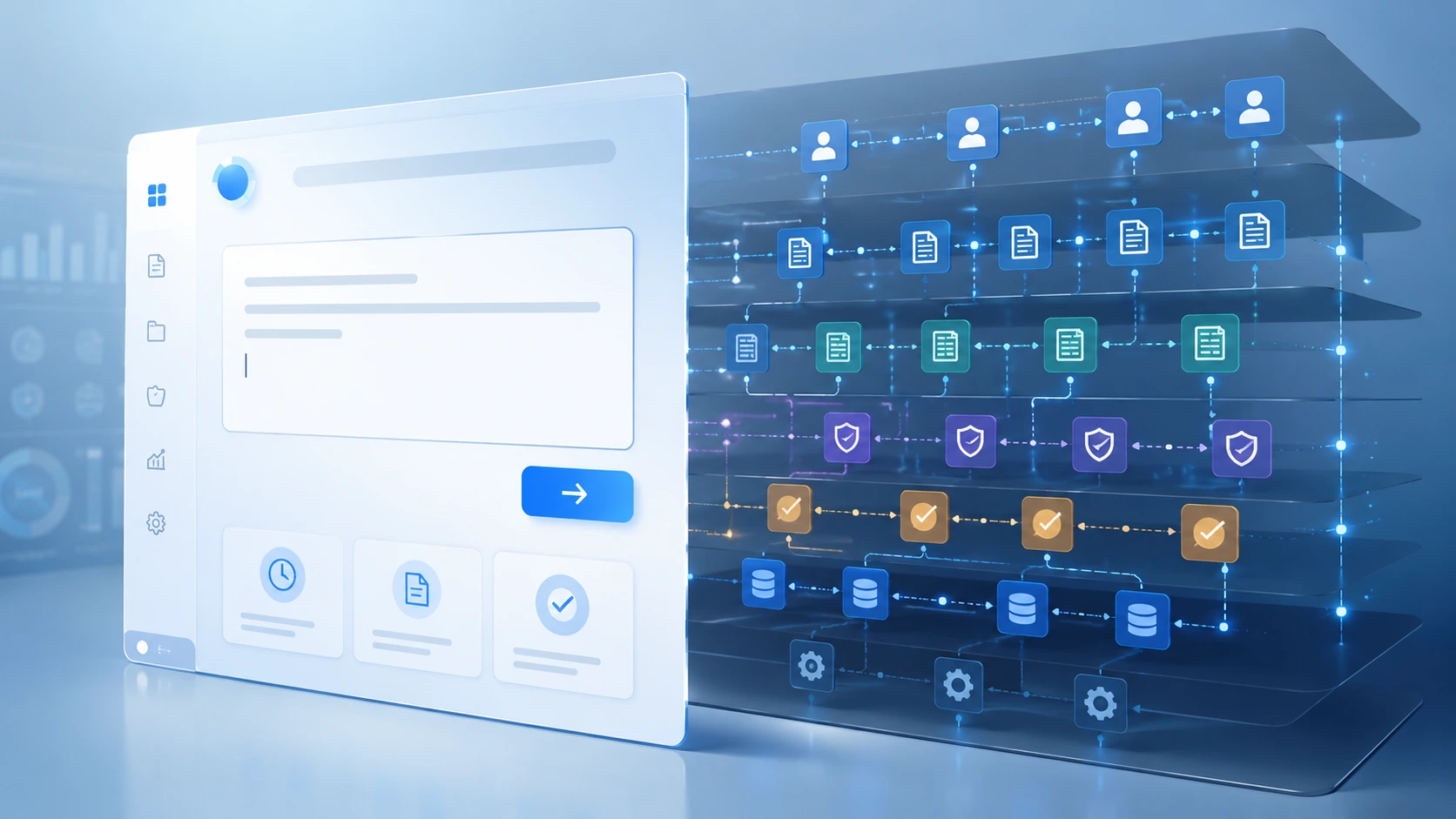
Behind a simple request, the system still needs to coordinate several things: the right data, the right document, the right permissions, the right business rules, and the right next step.
That coordination is where orchestration becomes important.
For HR systems, this means looking beyond the interface and asking how documents, workflows, permissions, templates, approvals, business rules, and employee data are connected behind the scenes.
Take a simple example: asking the system to find an employee document.
From the user’s perspective, that request is straightforward.
From the system’s perspective, it may depend on several things being clear:
- Where is the document stored?
- Which version is the correct one?
- Does the user have permission to access it?
- Is the document linked to the right employee record?
- Was it generated from the right template?
- Does it belong to the right process, region, or employee group?
The same applies to document generation.
Generating a document from a template may sound simple. But the quality of the result depends on whether the right employee data is available, whether the correct business rules are applied, whether the template is current, whether approvals are needed, and where the final document should be stored.
That is why I think orchestration will become more important.
The future of HR technology may not be defined only by adding more screens or more AI features. It may be defined by how reliably systems can coordinate the work, information, and decisions that sit underneath the user interaction.
AI Makes Operational Gaps More Visible
We have been exploring this ourselves through AI-connected tooling around document retrieval and document generation.
Even in relatively simple use cases, such as finding stored HR documents or generating documents from available templates, it quickly becomes clear that the interface is only one part of the experience.
The underlying structure matters just as much.
If documents are stored inconsistently, if ownership is unclear, if templates vary by team, or if approval logic sits outside the system, conversational AI does not automatically fix that. In some cases, it may make the gap more visible.
"If the structure underneath is unclear, the AI layer may expose that inconsistency rather than resolve it."
That is not a reason to avoid AI.
It is a reason to think carefully about the operational foundation that AI depends on.
A conversational interface works best when the system has reliable access to the right data, the right documents, the right permissions, and the right process logic. Without that foundation, the user experience may improve at the surface, while the underlying complexity remains unresolved.
Less Interface Does Not Mean Less Design
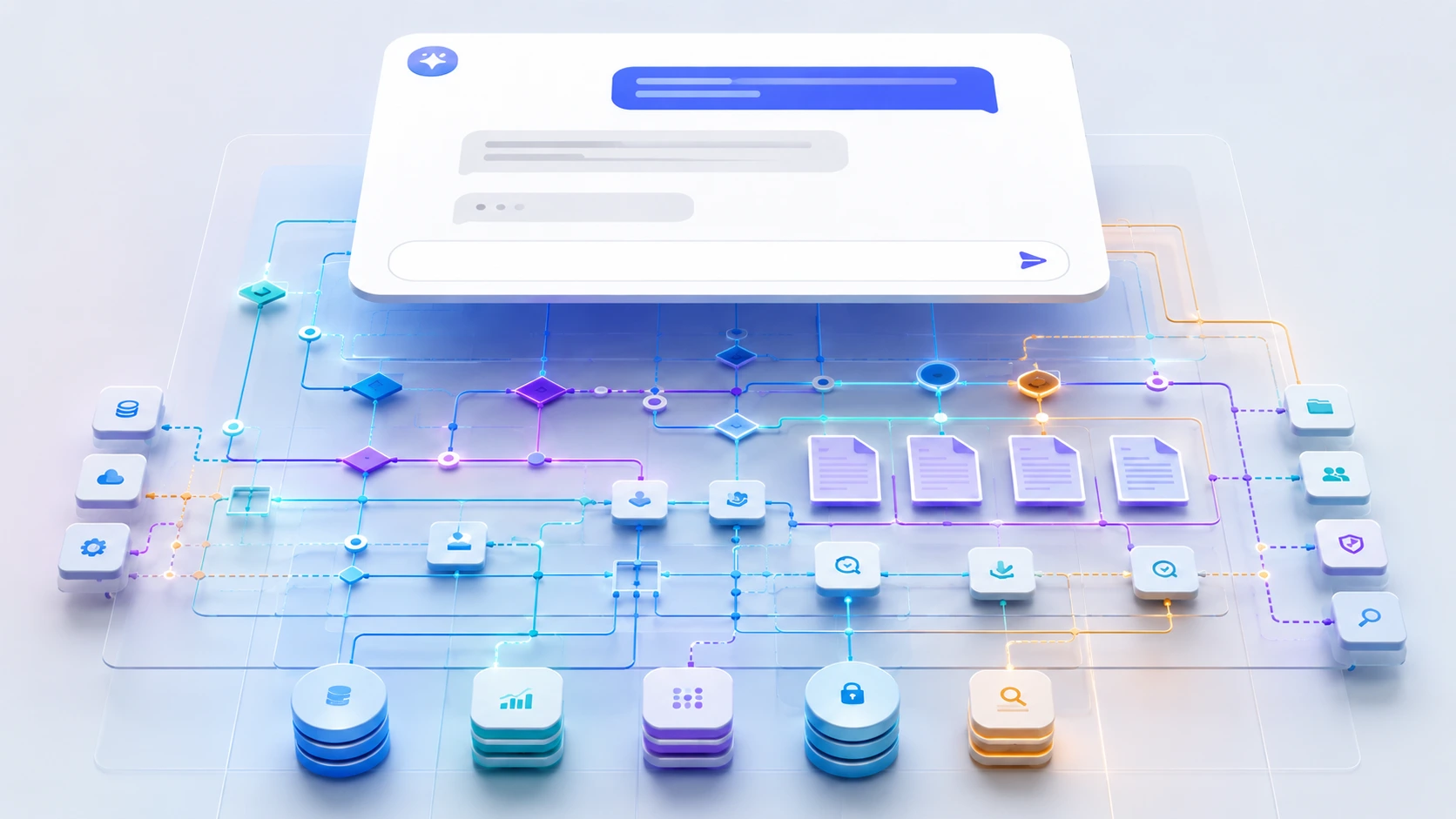
When people talk about conversational systems, it can be tempting to think the interface becomes less important.
I do not think that is quite right.
The design challenge changes.
It becomes less about asking users to navigate every step themselves, and more about designing systems that can understand intent, coordinate processes, and surface the right action at the right time.
That still requires careful design. It just shifts more of the design effort into the structure underneath.
For HR, that structure matters because HR processes are rarely isolated. Documents connect to employee records. Templates connect to policies. Approvals connect to roles. Storage connects to compliance requirements. Access connects to permissions. Small inconsistencies in any of these areas can affect the experience.
As AI becomes more embedded in enterprise systems, these connections may become more visible.
The Organisations Best Placed for AI May Be the Ones with the Strongest Foundations
The organisations that adapt fastest may not necessarily be the ones adopting the most AI tools.
They may be the ones that have already invested in clearer processes, better document structures, defined ownership, and reliable workflow foundations.
That is where I think the future of HR systems becomes interesting.
The future of HR systems may not be defined by the interface alone.
It may be defined by how well the work, information, documents, and decisions behind that interface are coordinated.
"As HR systems become more conversational, the structure underneath matters even more."
That is where the real value of the next generation of HR systems may sit.